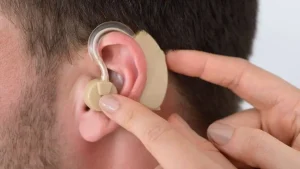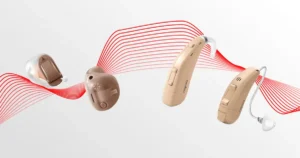
If you’ve picked up your hearing aids this morning and heard nothing but silence, you’re not alone – And in most cases, you are not even looking at expensive repairs. Hearing aids have stopped working in most homes that address one of a handful of everyday causes: a blocked wax guard, battery drainage, trapped moisture, or a setting that accidentally collided. This guide explains why your hearing aid is not working, offers solutions to hearing aid sound problems that you can try today, and explains when it’s time to repair the hearing aid at the Lahore center instead of repairing the hearing aid at home.
This guide is brought to you by RCHI – Rehabilitation Centre for the hearing impaired, which has been serving patients in Lahore, Rawalpindi, Faisalabad, Peshawar, Jhang and Sargodha since 1992.
Why is my hearing aid not working? Quick response
Before diving into the details, here’s the short version for the one asking “why is my hearing aid not working” right now: check the battery first, check the waxguard second, check the humidity third, and check the fourth volume/program setting. These four checks together address the overwhelming majority of hearing aids without any sound complaints, and none of them need to open the device or meet with a technician.
Hearing aids don’t Produce Sound: 7 common causes
Sound-inducing hearing aids almost always address one of these seven causes. Work through them in order-most people see errors in the first two or three checks.
1. Hearing aid dead battery, no sound
A battery that is low – but not completely dead – is one of the most overlooked causes of hearing aids that faint, crack, or cut out. This is the single most common trigger behind hearing aid dead battery no sound complaint, and the device can still turn on power and show a light or beep, which makes people understand that the battery is not a problem.
What to do:
Switch to a brand new battery, even if the old one Tests as “partially charged”.
For rechargeable models, place the aid in a fully charging dock and verify that the indicator light displays a full charge instead of a blink or amber signal.
Clean the contacts of the battery with a dry cloth-a thin layer of dust or a corrosion of the hearing aid battery on the contacts can prevent the current from flowing correctly, which is a very common problem in a dusty environment.
If you’re buying batteries locally, stick to sealed, branded zinc air cells (sizes 10, 13, 312, or 675 to suit your model). Loose or unbranded batteries sold cheaply in local markets are one of the causes of periodic electricity in Pakistan, and they leak or malfunction faster than sealed name-brand sales.
2. Hearing aid wax Guard block
Earwax and skin debris, by a wide difference, are the single most common reason why hearing aids do not cause any sound or suppressed sound complaints. A hearing aid wax guard blocked by even a little debris can completely close the outlet of the sound, as it is extremely tight to open.
What to do:
Hold the hearing aid in good light and inspect the waxguard and Dome openings to see if there is a visible obstacle.
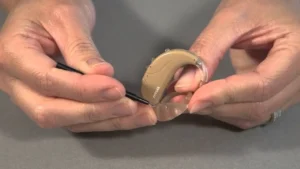
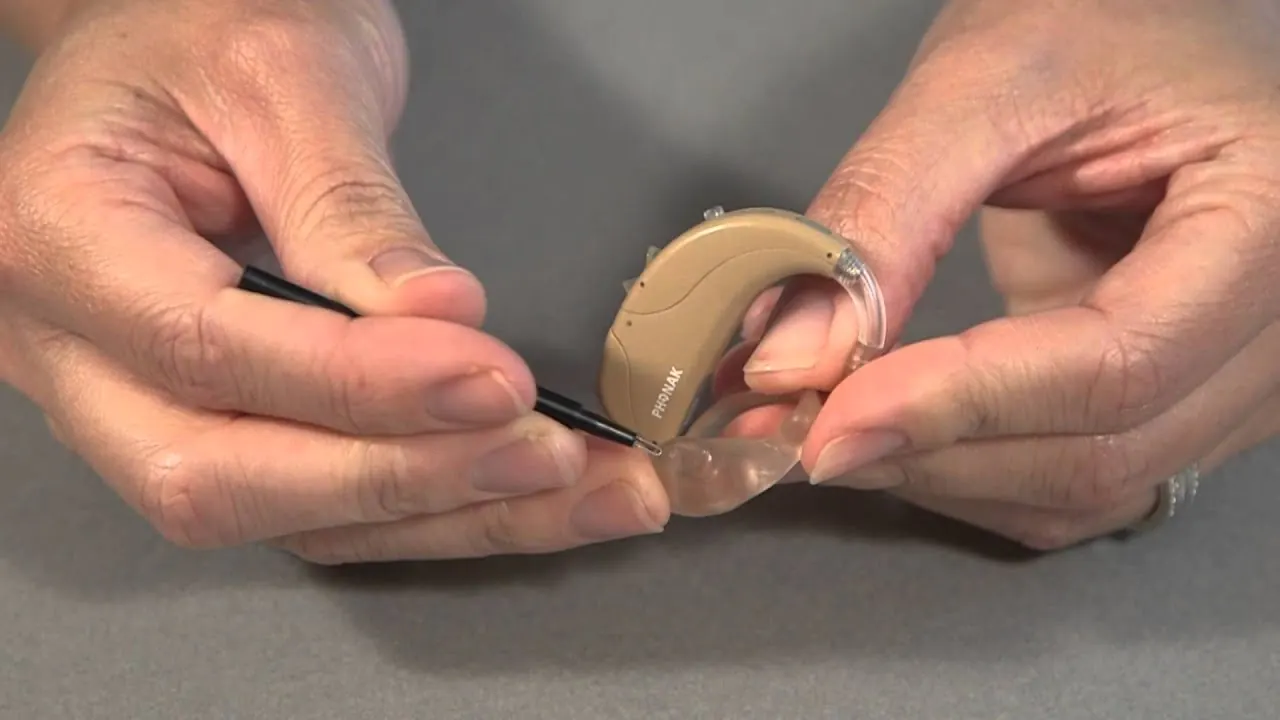
Use the cleaning brush or wax pick that comes with your device to gently clean the debris — never use water, alcohol or sharpness.
Replace the full hearing aid wax guard replacement instead of cleaning the old one. Guards are inexpensive and designed to be replaced regularly, with daily use almost every one to two weeks, or sooner if you see sound dropping.
If the hearing aid microphone blocked problem is also present (usually small ports on top of the device), clean it with the same soft brush — the blocked microphone can mimic the symptoms of the blocked receiver.
Making waxguard checks part of their weekly routine stops the most abrupt voiceless episodes before they even happen.
3. Hearing aid moisture loss
The summers of Lahore bring intense heat and sweat, and the monsoon months add moisture on top of it – both harsh on the fragile electronics inside the hearing aids. Hearing aids trapped in tubes, microphones, or battery compartments can cause moisture to become static, cracking, intermittent sound, or complete silence.
What to do:
Check the battery door and hoses for visible droplets or blurry film.
Open the battery compartment overnight to allow trapped moisture to evaporate.
Store the device in a suitable hearing aid dehumidifier or drying capsule instead of an ordinary can, especially in humid months.
Avoid wearing the device during bathing, during heavy sweating from outdoor activities, or in the rain — remove it and dry your ears first.
If you live somewhere dusty and humid, then a joint dry and clean cut is worth the investment, since dust mixed with moisture hardens into a residue that is very difficult to remove later.
4. Hearing aid weak sound fix: volume or program setting
Sometimes there is nothing wrong with this-the device is inserted into a different program of low volume or listening without you realizing it. This is one of the easiest hearing aid weak sound fix conditions to solve, and it happens easily when the hearing aid is handled, cleaned, or placed in a pocket or bag.
What to do:
Check the physical volume rocker or button for accidental adjustments.
If you use a smartphone app to control your hearing aids, open it and verify that the volume slider is not pulled down and that the correct program (for example, “normal” or customizable low output setting instead of “quiet”) is enabled.
Restore the default startup program, which clears any accidental changes in frequency or amplification.
5. Hearing aid receiver problem
On receiver-in-Canal (RIC) models, the speaker sits at the end of a thin wire that attaches to the main body of the device. A hearing aid receiver issue such as a loose connection can cut the sound completely from this side while the device otherwise appears to function normally.
What to do:
Check that the receiver wire clicks firmly at the top of the device.
Take a closer look at any visible skirmish, kinks, or cracking in the wire itself.
Try to make a simple diagnostic exchange: if you wear two hearing aids, switch the left and right receiver wires between the devices. If the silent side changes to match the wire instead of the ear, then the receiver wire itself is defective and needs to be replaced instead of the entire unit.
6. Hearing aid whistling or feedback noise
This is a different sign from “no sound”, but it is closely related and worth covering, since hearing aid whistling or feedback noise often appears in search of the same troubleshooting. Impressions usually mean that the amplified sound is coming out of the ear canal and being picked up again by the microphone.
What to do:
Sting in the canal, re-insert the hearing aid or ear dome to ensure a complete seal.
Check the accumulation of wax in your ear canal, not just the device — a partially closed canal can cause the sound to be reflected back.
If the dome or mold no longer fits well (normal after weight changes or wear over time), you may need different dome sizes or professional refitting.
7. Hearing aid muffled sound causes: problems with tubing
For behind-the-ear (BTE) hearing aids, plastic tubes that carry sound from case to ear can become stiff, cracked, twisted, or thickened during months of use. This is one of the most common causes of hearing aid muffled sound causes, which produces a dim or weak signal.
What to do:
Gently straighten any visible kink in the tube.
Hold the tube to the light to check for stuck moisture droplets, and dry it if necessary.
Replace tubes that are yellow, hard or cracked — this is routine maintenance, not a sign of a device malfunction, and most audiologists can replace it in minutes
Hearing aid troubleshooting guide: quick checklist
This hearing aid troubleshooting guide checklist covers corrections in order — most problems are resolved in the first two or three steps:
- Put a fresh battery or fully charge the device.
- Clean the battery contacts to remove corrosion.
- Inspect and complete the replacement of the hearing aid wax guard.
- Gently brush microphone and port.
- Dry any moisture from the device and, if necessary, allow the device to dry out overnight.
- Confirm the volume and program settings are correct.
- Inspect the wire or tubing of the receiver for damage.
- If two aids are worn, replace the components between the ears to separate the error.
Hearing aid repair Lahore: when to go to the service center
This hearing aid troubleshooting guide checklist covers corrections in order — most problems are resolved in the first two or three steps:
- Put a fresh battery or fully charge the device.
- Clean the battery contacts to remove corrosion.
- Inspect and complete the replacement of the hearing aid wax guard.
- Gently brush microphone and port.
- Dry any moisture from the device and, if necessary, allow the device to dry out overnight.
- Confirm the volume and program settings are correct.
- Inspect the wire or tubing of the receiver for damage.
- If two aids are worn, replace the components between the ears to separate the error.
Hearing aid repair Lahore: when to go to the service center
The solution to home problems solves most everyday problems, but some symptoms indicate an internal disorder that requires professional diagnostic equipment and adequate hearing aids visit to Lahore:
- Complete silence continues after the fresh battery, clean wax guard, and dry device.
- You hear cracking or static that are not cleaned after drying.
- The device is clearly dropped, crushed, or exposed to a lot of water.
- Sound is there but it doesn’t matter which program or volume you choose.
- The device is years old and has never had a professional deep clean.
An approved hearing aid service center Lahore can properly diagnose, replace any broken components, and determine if the hearing machine needs to be repaired or reprogrammed when your hearing machine not working Pakistan problem occurs, and you haven’t found any hearing aid repair in Lahore service throughout Pakistan. If the hearing aid is still under warranty, do not send to an unapproved repair shop as sometimes this can invalidate the manufacturer’s warranty.
Since 1992, RCHI, which has offices in Rawalpindi, Faisalabad, and Peshawar, has been offering audiology and hearing aids throughout Pakistan. It is mainly located on Ferozepur Road Lahore.
His team manages diagnostic testing, cleaning, waxguard and tubing replacement, and authorized servicing for
For Siemens (Signia) and Widex devices, his team oversees diagnostic testing, cleaning, waxguard and tubing replacement, approved service, hearing tests, fittings, and post-purchase assistance for patients across the country.
Hearing aid maintenance tips Pakistan: daily and weekly habits
Pakistani users can significantly reduce the possibility of another quiet morning by following to these daily hearing aid rehabilitation instructions, particularly in a dusty and humid climate:
- Every night, wipe your device with a soft, dry towel before storing it.
- Leave the battery cover open overnight to promote airflow and prevent moisture buildup.
- Keep your hearing aid away from direct sunlight, water, and dust.
- Change the wax guards as scheduled instead of waiting for the sound to fail.
- To avoid corrosion prone unbranded sales just buy batteries from a trusted supplier or audiology center
- Book a professional cleaning and have a check-up roughly every six months, even if nothing seems wrong
Hearing Aid Battery Pakistan price
Hearing Aid Battery Pakistan price and device price vary by brand and technology level. As a general leader for the Pakistani market in 2026:
- Entry-level hearing aids: PKR 20,000 – 35,000 per ear
- Mid-range hearing aids: PKR 35,000 – 75,000 per ear
- Premium hearing aids: PKR 80,000-210,000+ per ear
- Ultra premium hearing aids: PKR up to 450,000+ per ear
Disposable zinc air batteries are affordable and widely available, but prices vary by brand and city – always verify current prices with your audiology center instead of an unverified local vendor, as fake or old stock batteries are a common cause of short battery life and hearing aid battery corrosion.
Frequently asked questions
Why is my hearing aid making no sound?
In terms of probability, the most common causes are, a dead or weak battery, a wax guard blocked by ear wax or debris, a trap of moisture inside the device, and accidentally a decrease in volume or incorrect configuration of the program.
How to fix hearing aid with no sound?
Replace the battery or fully recharge the device first, then check and replace the waxguard, check the humidity and dry the device if necessary, and make sure the volume and programs are set correctly. If none of them work to restore sound, the receiver’s internal component or cable might need to be fixed by a specialist.
What causes hearing aid to stop working?
Sudden failure is often caused by a fast-forming blockage in the waxguard or sound outlet, the battery arrives at the end of its charge without warning, or unexpected moisture exposure such as sweat, rain, or moisture.
How to clean a hearing aid wax guard?
Use the cleaning brush or wax pick provided with your device to gently remove visible debris, then completely replace the wax guard using the manufacturer’s replacement tool-wax guards are a usable part that is to be replaced regularly rather than reused indefinitely.
When should I take my hearing aid for repair?
If you hear static or distortion after checking the battery, waxguard and the humidity, or if you drop it, if it is very wet or if it has not been professionally cleaned after 6 months, take it to an audiologist or the Official Service Center.
In terms of probability, the most common causes are, a dead or weak battery, a wax guard blocked by ear wax or debris, a trap of moisture inside the device, and accidentally a decrease in volume or incorrect configuration of the program.
Replace the battery or fully recharge the device first, then check and replace the waxguard, check the humidity and dry the device if necessary, and make sure the volume and programs are set correctly. If none of them work to restore sound, the receiver’s internal component or cable might need to be fixed by a specialist.
Sudden failure is often caused by a fast-forming blockage in the waxguard or sound outlet, the battery arrives at the end of its charge without warning, or unexpected moisture exposure such as sweat, rain, or moisture.
Use the cleaning brush or wax pick provided with your device to gently remove visible debris, then completely replace the wax guard using the manufacturer’s replacement tool-wax guards are a usable part that is to be replaced regularly rather than reused indefinitely.
If you hear static or distortion after checking the battery, waxguard and the humidity, or if you drop it, if it is very wet or if it has not been professionally cleaned after 6 months, take it to an audiologist or the Official Service Center.
Final thoughts
Most hearing aids that don’t cause sound problems come down to four simple things: battery, wax, moisture and setting. It only takes a few minutes to work through them and resolve most cases without a repair visit. If your device is still silent, muffled, or deformed after a thorough examination, there is an opportunity to take it to a qualified audiologist or authorized hearing aid repair Lahore center for proper diagnosis and repair — especially if the device is still under manufacturer warranty.
If home troubleshooting doesn’t resuscitate your hearing aids, rchi audiologists can run a complete evaluation, replace cracked parts, and fit your device — or a suitable replacement — and work properly again. RCHI has been Lahore’s trusted hearing care center since 1992, offering repair services from Siemens and Widex hearing aids, hearing tests, after-sales support, and its Lahore head office and centers in Rawalpindi, Faisalabad, Peshawar, Jhang and Sargodha.
Ghafoor Plaza, 289-Ferozepur Road, Lahore 📞 042-35835808 | 0300-8443083 🌐 rchipak.com